











Integrating Thermal Cameras into Unmanned Systems
24. 9. 2025
Thermal Camera Sensitivity: A Key Parameter for Image Quality
1. 10. 2025Navigation Challenges at Sea
Navigation at sea presents unique visibility challenges. Darkness, glare, sea spray, and fog can obscure critical details and make timely reactions difficult. While artificial lights in cities often interfere with natural night vision, the situation on open waters is quite different — complete darkness and the absence of ambient light make detecting unlit objects much more difficult.
Night Vision Technologies
Over the past decades, several technologies have been developed to improve visibility in low-light conditions and enhance safety for boat operators. The most common approaches include image intensifier night vision, ultra-low-light cameras, and thermal imaging. Each has its own strengths and limitations, and their effectiveness varies depending on the situation.
Traditional image intensifier night vision, recognizable by its characteristic green hue, works by amplifying existing light sources such as starlight or moonlight to produce a brighter image. These devices are popular for their portability and affordability. However, they rely on the presence of some ambient light, and their performance drops significantly on overcast nights or in complete darkness. Additionally, intense light sources can overwhelm the sensor, causing glare or even damage to the device.

Ultra-Low-Light Cameras
Ultra-low-light cameras, originally developed from CCTV security systems, use highly sensitive sensors to deliver clearer images in very poor lighting conditions. They generally handle mixed lighting better than image intensifiers and are less prone to blooming. However, they still require at least minimal light — whether from the moon, nearby artificial sources, or infrared illumination — and therefore do not function effectively in total darkness.
Thermal Imaging – Seeing Heat Instead of Light
Thermal imaging takes a completely different approach. Instead of relying on light, thermal cameras detect infrared radiation — or heat — emitted by all objects. This allows them to operate equally well during the day and at night, in complete darkness, and in conditions where other technologies fail. Thermal cameras are not affected by glare and can see through light smoke, haze, and mist.
For maritime use, this makes thermal imaging invaluable. It enables sailors and crews to detect vessels, buoys, obstacles, or even people in the water, regardless of lighting conditions. In terms of safety and navigation, it provides a critical advantage where human eyesight and conventional night vision technologies fall short.
Workswell WEOM HD Thermal Core
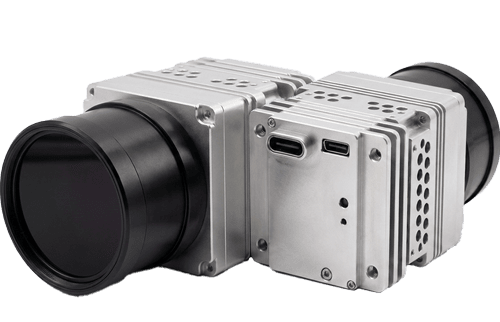
A modern example of advanced thermal imaging is the Workswell WEOM HD Thermal Core — a compact and highly versatile LWIR uncooled thermal camera module. The WEOM offers a native resolution of 640 × 512 pixels and, thanks to its dedicated image processor, delivers Full HD video output at 1920 × 1080 pixels. A wide selection of lenses, ranging from 4 mm to 100 mm, makes the module adaptable for both short-range and long-range observation.
With IP connectivity and ONVIF compatibility, the WEOM HD Thermal Core can be seamlessly integrated into CCTV systems, maritime applications, or security platforms. Its rugged design and proven reliability ensure stable performance even in harsh environments, making it especially suitable for demanding conditions at sea.
Conclusion
While image intensifiers and ultra-low-light cameras can be useful in specific conditions, they remain dependent on external light sources. Thermal imaging, by contrast, offers true independence from lighting conditions. The Workswell WEOM HD Thermal Core exemplifies how modern thermal technology can be practically applied — delivering precise, stable, and easily integrable solutions that enhance navigation safety and protect both crews and assets.
Looking for More?
If you are looking for a thermal imaging solution that combines European quality, top-tier performance, and complete regulatory independence, the WEOM HD Thermal Core is here to deliver. Completely ITAR-free and designed for seamless integration, this module isn’t just a component—it’s a comprehensive solution. Whether you need integration support or expert advice, our team is ready to help.
Interested in learning more or exploring integration possibilities?
Get in touch with our team—our experts are ready to help you find the perfect configuration to meet your mission requirements.
