










Optimal Field of View in Thermal Imaging: Balancing Situational Awareness and Target Detail
31. 10. 2025
The new generation Hecthor II uses the WIRIS Enterprise thermal‑imaging camera
12. 11. 2025Thermal Driving Assistance in Night, Fog, and Smoke: What Truly Helps Drivers and Operators
Driving or operating a vehicle at night, in fog, or through smoke ranks among the greatest challenges for both drivers and operators. In such conditions, human vision and standard cameras—reliant on visible light—often fail. This is where thermal driving assistance comes into play: a technology that allows you to "see" even when visibility drops to zero.
Visible spectrum cameras work well only when there’s sufficient light. As soon as darkness falls or fog and smoke appear, the image becomes blurry, contrast fades, and situational awareness is lost. For emergency, industrial, or unmanned vehicles, this disorientation can have serious consequences. In practice, it means a higher risk of collisions, slower response times, and greater mental strain on the operator.
How Thermal Imaging Works
Thermal cameras detect infrared radiation, which all objects emit based on their temperature. Whether it’s dark or smoky makes no difference—the system detects heat, not light.
This enables thermal imaging to provide reliable visibility even in total darkness. The temperature contrast between objects and their background creates a clear image, highlighting obstacles, people, animals, or terrain irregularities.
Infrared radiation also penetrates smoke and fog better than visible light, allowing the operator to see what would otherwise remain hidden.

Where Thermal Assistance Has the Greatest Impact
1. UGV – Unmanned Ground Vehicles
For UGVs, dependable visual assistance is essential. During nighttime operations, in unlit terrain, or in smoke screens, a thermal camera often becomes the only “eye” capable of interpreting the surroundings. It aids navigation, obstacle avoidance, and situational awareness—where conventional optics fall short. For operators, this means confidence and continuity even in extreme scenarios.
2. Emergency Vehicles
Firefighting, rescue, and police vehicles often operate in zero-visibility conditions—at night, in smoke, or dust. Thermal imaging allows drivers to detect roads, obstacles, or people earlier than with the naked eye. This improves safety and operational efficiency while reducing stress in high-pressure environments.
3. Industrial and Heavy Machinery
In forestry, mining, or construction, machines frequently operate in low light or dusty environments. A thermal camera gives the operator confidence they won’t miss a nearby obstacle, person, or vehicle—even when visibility is far from ideal. It also reduces fatigue by delivering a clear image without the need for artificial lighting.
Benefits for Safety and Comfort
Thermal driving assistance isn’t just about technology—it’s about confidence. A driver who can see beyond the limits of visible light reacts faster and with less stress. A UGV operator maintains full control, even at night. The result is safer operations, fewer errors, and overall more comfortable handling. The technology redefines not just safety, but also reliability and comfort.
TADAS Ethernet – A Smart Solution for Ground Platforms
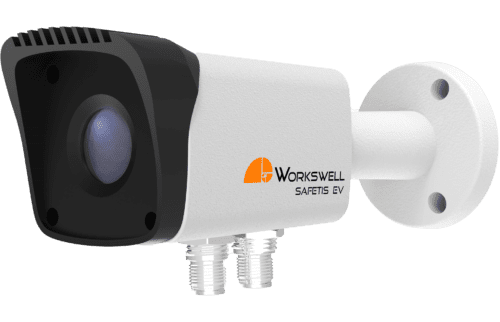
These advantages are brought to life in systems like TADAS Ethernet by Workswell. This thermal assistance system for vehicle navigation and control uses Ethernet (IP-based) data transmission, allowing easy integration into existing onboard networks.
TADAS Ethernet offers high sensitivity (<30 mK), environmental durability (IP67), and Power over Ethernet (PoE) capability—making it ideal for deployment in tough conditions where conventional systems fail. Whether it's for UGVs, emergency vehicles, or heavy machinery, TADAS Ethernet delivers a key component of situational awareness—the ability to "see" the full picture, not just the visible spectrum.
Looking for More?
The TADAS Thermal ADAS System is purpose-built for autonomous and semi-autonomous ground vehicles operating in the harshest environments. With superior thermal sensitivity, long-range detection, and robust construction, TADAS enhances situational awareness and driving safety—even in complete darkness, smoke, fog, or dust. Whether you're integrating thermal vision into unmanned tactical platforms or enhancing navigation capabilities in industrial robotics, TADAS delivers reliable thermal intelligence where it matters most.
Interested in learning more or exploring integration possibilities?
Get in touch with our team—our experts are ready to help you find the perfect configuration to meet your mission requirements.
