










Unmanned Vehicles: Why They Are Becoming Essential for Tactical Operations
29. 7. 2025
Why Thermal Vision is Crucial for Autonomous Operations in Zero Visibility
1. 8. 2025Why Thermal Imaging Is Crucial for UAV, UGV, and USV Applications
Unmanned systems are no longer experimental concepts. Drones (UAVs), ground robots (UGVs), and autonomous watercraft (USVs) are playing increasingly important roles across various industries—from energy inspections to disaster response. But what do these vastly different systems have in common? They all require reliable, high-quality vision—especially in environments where conventional optics fall short. That’s where thermal cameras become indispensable.
Drones That See Beyond the Surface
UAVs have revolutionized industrial inspections and environmental monitoring. Whether flying over solar farms, pipelines, or hazardous zones, they collect valuable data from hard-to-reach locations. However, when the task involves detecting heat loss, electrical faults, or hidden defects, visible-light sensors are not enough. Thermal imaging reveals what’s invisible to the human eye—even at night or through light fog—transforming drones into powerful diagnostic tools. And they can do all this while maintaining a safe distance from the object being inspected.

UGVs on the Front Line
Ground robots equipped with thermal sensors often operate where humans can’t—or shouldn’t. Industrial disaster zones, collapsed buildings, or chemically contaminated areas require extreme caution. UGVs with thermal cameras can detect body heat in search-and-rescue missions, identify overheating machinery in confined factory spaces, or monitor for early signs of fire or gas leaks. These insights are vital for both operational safety and strategic decision-making on the ground.
Autonomous Watercraft with Thermal Vision
Though less widespread than UAVs, USVs are becoming essential in port security, environmental research, and offshore infrastructure monitoring. Their biggest challenge is visibility—particularly in poor weather or nighttime conditions. Thermal imaging overcomes these obstacles by detecting floating objects, heat sources, or surface irregularities that would otherwise go unnoticed. For autonomous systems navigating complex marine environments, this level of perception isn’t optional—it’s mission-critical.
One Technology, Three Domains
Whether flying through the air, traversing hazardous terrain, or navigating open water, unmanned systems all benefit from one enabling technology: thermal imaging. A well-integrated thermal camera enhances real-time awareness, supports autonomous navigation, and improves decision-making accuracy. What matters most is adaptability—lightweight payloads for drones, rugged protection for ground vehicles, or waterproofing for marine environments.
Workswell's Expertise
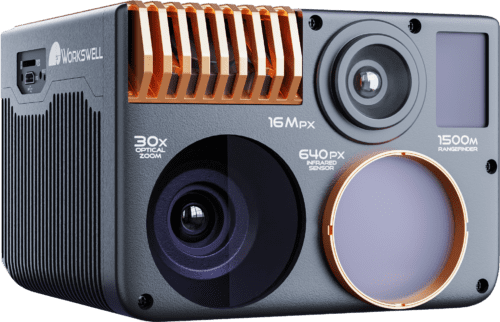
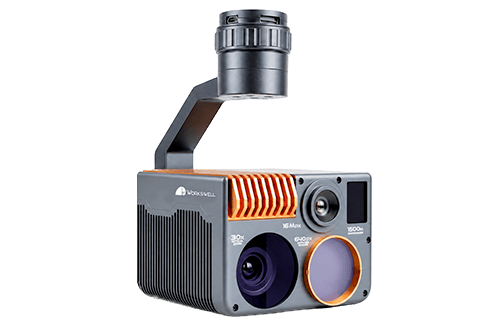
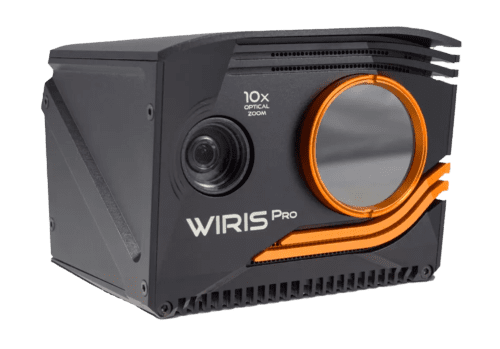
At Workswell, we specialize in designing thermal imaging solutions tailored for UAV, UGV, and USV applications. Our systems are trusted across industrial, scientific, and public safety sectors—delivering real-world results. If you’re exploring how thermal technology could enhance your unmanned system, we’d be happy to help.
Looking for More?
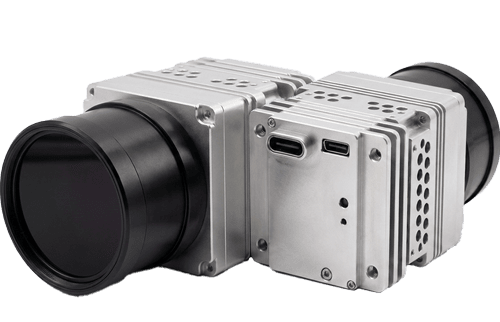
If you are looking for a thermal imaging solution that combines European quality, top-tier performance, and complete regulatory independence, the WEOM Thermal Core is here to deliver. Completely ITAR-free and designed for seamless integration, this module isn’t just a component—it’s a comprehensive solution. Whether you need integration support or expert advice, our team is ready to help.
Interested in learning more or exploring integration possibilities?
Get in touch with our team—our experts are ready to help you find the perfect configuration to meet your mission requirements.
