










Thermal Imaging for Safer Maritime Navigation
9. 9. 2025
Thermal Resolution HD Becomes the New Standard for UAVs
23. 9. 2025Introduction – Every Second Counts at Sea
The ocean can be unforgiving—unexpectedly rough waters, fading daylight, and dense fog can combine to create life-threatening conditions for those in distress. In marine search and rescue (SAR), every passing moment can mean the difference between salvation and tragedy. Traditional visual detection methods, especially optical cameras, often struggle in low-light or obscured conditions, making it difficult to locate individuals in the water. Thermal imaging offers a crucial advantage: the ability to detect heat rather than rely on visible light, dramatically enhancing SAR effectiveness.
Uncooled LWIR Cores: Reliable Tools When Visibility Fails
At the heart of advanced thermal imaging lie uncooled long-wave infrared (LWIR) cores. Without the need for bulky cooling systems, these cores are rugged, energy-efficient, and ready to operate at a moment’s notice. Their exceptional thermal sensitivity enables them to render clear images of human bodies in the water—even when nothing is visible to the naked eye.

Realistic SAR Scenarios Enhanced by Thermal Vision
Imagine a drone equipped with one of these thermal imaging systems dispatched to locate a person stranded at sea at night. The human body continues to emit heat, making it detectable even in vast darkness. The thermal feed enables rescue teams to pinpoint a location swiftly—even in fog or severe weather.
Thermal-equipped drones also enhance monitoring of life rafts or rescue vessels, especially in poorly lit or high-contrast conditions. When combined with rangefinding and zoom-capable RGB feeds, they enable real-time, precise assessment and coordination—essential for decisions such as where to drop rescue lines or direct rescue vessels.
Benefits for SAR Operators
-
Faster Response Times – Thermal imaging can distinguish human heat signatures from waves and debris, significantly reducing search times.
-
Reduced Risk to Personnel – UAVs can be deployed into hazardous zones, minimizing risk to human crews while extending operational reach.
-
Improved Success Rates – Superior detection in difficult conditions translates directly into higher rescue success rates.
-
Enhanced Coordination – Dual feeds—thermal for detection, RGB (with zoom and rangefinding) for identification and targeting—enable precise and coordinated SAR operations.
Workswell Cameras as Critical SAR Tools
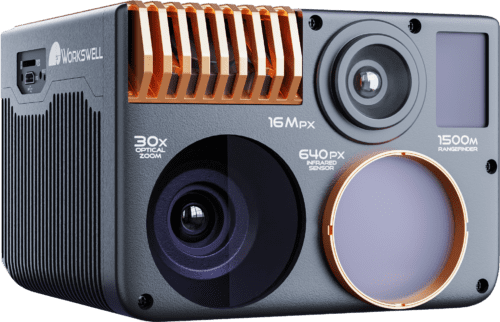
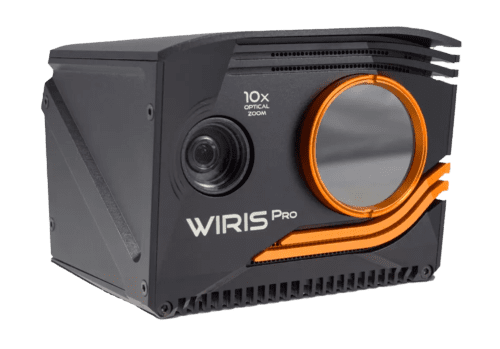
Devices like the WIRIS Enterprise and WIRIS Pro are transforming SAR missions by delivering dependable, high-resolution thermal and visual imaging from aerial platforms. Their rugged construction, advanced optics, and wide-ranging connectivity make them invaluable tools for both manned and unmanned rescue units.
Conclusion – Thermal Vision: A Lifeline in the Dark
In the unforgiving environment of sea rescues, advanced thermal imaging is more than a technological asset—it’s a lifesaving necessity. Workswell’s WIRIS Enterprise and WIRIS Pro systems represent a significant leap forward, offering highly accurate detection and real-time situational awareness that can mean the difference between tragedy and survival.
Curious how these systems could enhance your SAR protocols? We’re here to help you explore the best-fit solutions for faster, safer, and more effective operations—just reach out.